Alone,
Together
By Rachel Davis & Carson Buller
Stories
Digital Disopsition
Lopsided Lives
Back & Forth & Back
Podcast
Digital Disposition
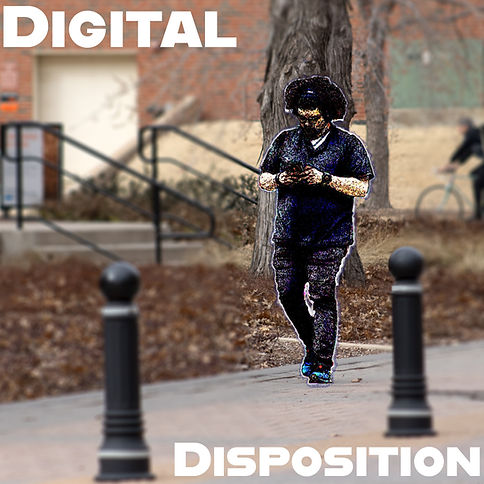
Smart Phones and Social media are supposed to keep us connected but in reality people in this generation of cell phones are more disconnected than ever. This lonely life extends to the high school and college population as well. In this audio story we have two teachers and a college student discuss this and the effects it has on students.
Sources
Diane Cook
School teacher with over 30 years of experience working with students.
Albert Maton
Sophomore Software Engineering Student at OSU
Garrett Cook
Psychology Teacher with a Bachelor of Arts Degree in psychology and a bachelor of arts degree in philosophy from OSU
Lopsided Lives
By Carson Buller & Rachel Davis
“Their jobs are becoming their lives”- Rhonda Kinser
Few are more familiar with the stressors of work life than Rhonda Kinser.
A counselor with over two decades of experience, Kinser is acutely aware of both the brutality of hard work and the rewards that make it worth one’s doing. Those who put in the time and effort would reap the benefits of their contributions and provide themselves and their families with stability and potential luxury, while those who meandered on the clock would see it reflected directly within their personal buying power.
In the not-so-distant past, there was a clear connection between effort and wealth (allegedly). Those days are long gone.
Over the last four years, Kinser has noticed a worrying trend among many of her clients: a complete erosion of the ‘life’ portion of work-life balance.
“Their jobs are becoming their lives,” said Kinser “The cost of living has skyrocketed in the last four years, [and] they’re having to work more and work harder just to break even. It’s not even just because they want to have extra money to go on vacation. It’s just to live.”
This experience isn’t unique to Kinser and her clients. According to the US Bureau of Labour Statistics, the nationwide rate of inflation has reached 7%, 6.5%, 3.4% and 3.2% over the last four years, respectively, while pay is lagging far behind. This has created an economic environment that is largely desensitized to the idea of requiring multiple sources of income.
“We were living paycheck to paycheck and really struggling,” said Jenny Laverty, a teacher, Mary Kay consultant, seasonal Christmas tree decorator, and mother of four girls. “And my husband has a really good paying job. [He] makes over $120,000 a year driving a truck.”
Despite a dual income of over $150,000 per year, the Lavertys were unable to achieve a sense of financial security from two jobs alone. Through a combination of extra semi-truck hours and a rigorous consulting routine, the Lavertys were eventually able to enjoy significantly more financial freedom, at the small expense of their personal relationships.
“Instead of staying home with the family, he’s out working on all these other semis, just trying to make some extra money that way,” Laverty said. “So I really don’t ever see my husband during the week. I’m basically a single parent during the week, which is a lot… I don’t have friends. I don’t have a life.”
Laverty is far from alone in this issue. Kinser has noticed a similar pattern among her own clients, noting that many don’t have the capacity to cultivate outside relationships while managing a heightened workload.
“Most of the people I see in counseling, at best they might have one or two friends,” Kinser said. “I’m talking like a mom and her husband, and they might have one other couple they consider a friend.”
Creating and maintaining friendships takes time, energy and planning. Valire Phillips, a shop worker, pig farmer, registered agent and mother of two college students, relies on her accounting background to help plan out her busy weeks. Planning isn't always enough.
“Yeah, I just I'm just tired. I don't want to try to hold a conversation with anyone because I just want to sit there and it's just sitting on the porch” Phillips said “I just I don't want to, I feel like I don't have the energy to carry on a decent conversation.”
Parenthood goes hand-in-hand with sacrifice, and while it’s not uncommon for parents to work longer hours for the sake of their families, the issue of work-life balance is one that transcends the bounds of age and family.
On the younger side of the human spectrum, the emerging adults are often balancing one or two jobs on top of their studies. School is a difficult task for many students in and of itself, and at a certain point, an additional workload can be costly for one’s GPA.
“Grades always suffer the more a student has to work,” Kinser said of student workers. “Any student taking 15-20 hours of classes and working more than 20 hours per week, it’s going to affect their grades.”
According to the American Association of University Professors (AAUP), there is a direct link between surpassing the 20-hour work week mark and declining grades for college students. Even for those capable enough to manage both, such as Nayeli Cabral, a cosmetology student and Walmart employee.
“By the end of Saturday, I’m so drained,” Cabral said. “Like, I just want to be in bed, [and] not even go out. It takes a toll on the body sometimes.”
Cabral finds herself working 70 hours a week at times. Cutting out social time is a byproduct of overworking to make ends meet.
Paetyn Goodell manages both work and school as a nursing student, Tulsa County Courthouse clerk and home cleaner. After all that work and school there’s seldom energy or time left over to dedicate to outside factors.
“I have class 6:30 a.m. to 9:00 a.m. three days a week, and then I clean on the weekends,” Goodell said of her weekly schedule. “And I work 40 hours at the courthouse. Depending on how many shifts I’m in and [extra shifts] I pick up, [I work] anywhere from 50 to 70 hours, and that’s on top of school work.”
For Goodell working extra now is all about setting up for her future.
“I definitely do not want to keep multiple jobs going in the future. It definitely has taught me a lot of like what time management looks like,” said Goodell. “But once I have my degree, I do not want to do multiple jobs. It's not fun.”
Finding the balance of time between school, work and a social life can be difficult for student workers. Unfortunately the disproportion between these times can impact one's health.
“It’s kind of like this vicious cycle between mental health and physical health,” Kinser said of the health impact of overworking oneself. “They don’t get the choice to say, ‘well, I’m in pain, I can’t go to work.’ So they’re working more, and their body is hurting more.”


Back & Forth & Back
Reflective Podcast
Our Team
Rachel Davis
Multimedia Journalist
(940) 222-1737
davis.rachel@okstate.edu
Carson Buller
Multimedia Producer
(580) 539-1096
carson.buller@okstate.edu